How Can a Spine Specialist Diagnose Slip Disc and Sciatica?
Back pain can affect your daily routine, making it difficult to sit, walk, bend, or even sleep comfortably. Sometimes, the pain travels from your lower back to your hips, buttocks, and legs. These symptoms may indicate a slipped disc or sciatica. Consulting an experienced Spine Specialist in Delhi can help identify the underlying cause and determine the right treatment approach.
Slip disc and sciatica are common spinal conditions. However, they are not the same. A slipped disc occurs when the soft inner portion of a spinal disc pushes through its outer layer. Sciatica develops when the sciatic nerve becomes irritated or compressed, causing pain that travels along the leg.
At Pain X Spine & Joint Clinic, understanding the source of pain is an important step towards effective treatment. A proper diagnosis helps specialists recommend suitable care based on individual symptoms and medical needs.
For fast information, direct chat with us on WhatsApp
What Is a Slip Disc and How Does It Cause Sciatica?
Your spine contains small cushioning structures called intervertebral discs. These discs sit between the bones of your spine and help absorb pressure during movement.
A slip disc, also known as a herniated disc, occurs when part of the disc bulges or moves beyond its normal boundary. This can put pressure on nearby spinal nerves.
When a disc in the lower back affects the sciatic nerve roots, it may cause sciatica.
Common symptoms include:
- Persistent lower back pain.
- Pain travelling from the buttocks to one or both legs.
- Tingling or numbness in the feet.
- Muscle weakness in the affected leg.
- Increased discomfort while sitting, bending, or coughing.
Not every slipped disc causes symptoms. Therefore, a detailed assessment is necessary before confirming the diagnosis.
How Does a Spine Specialist in Delhi Diagnose a Slip Disc?
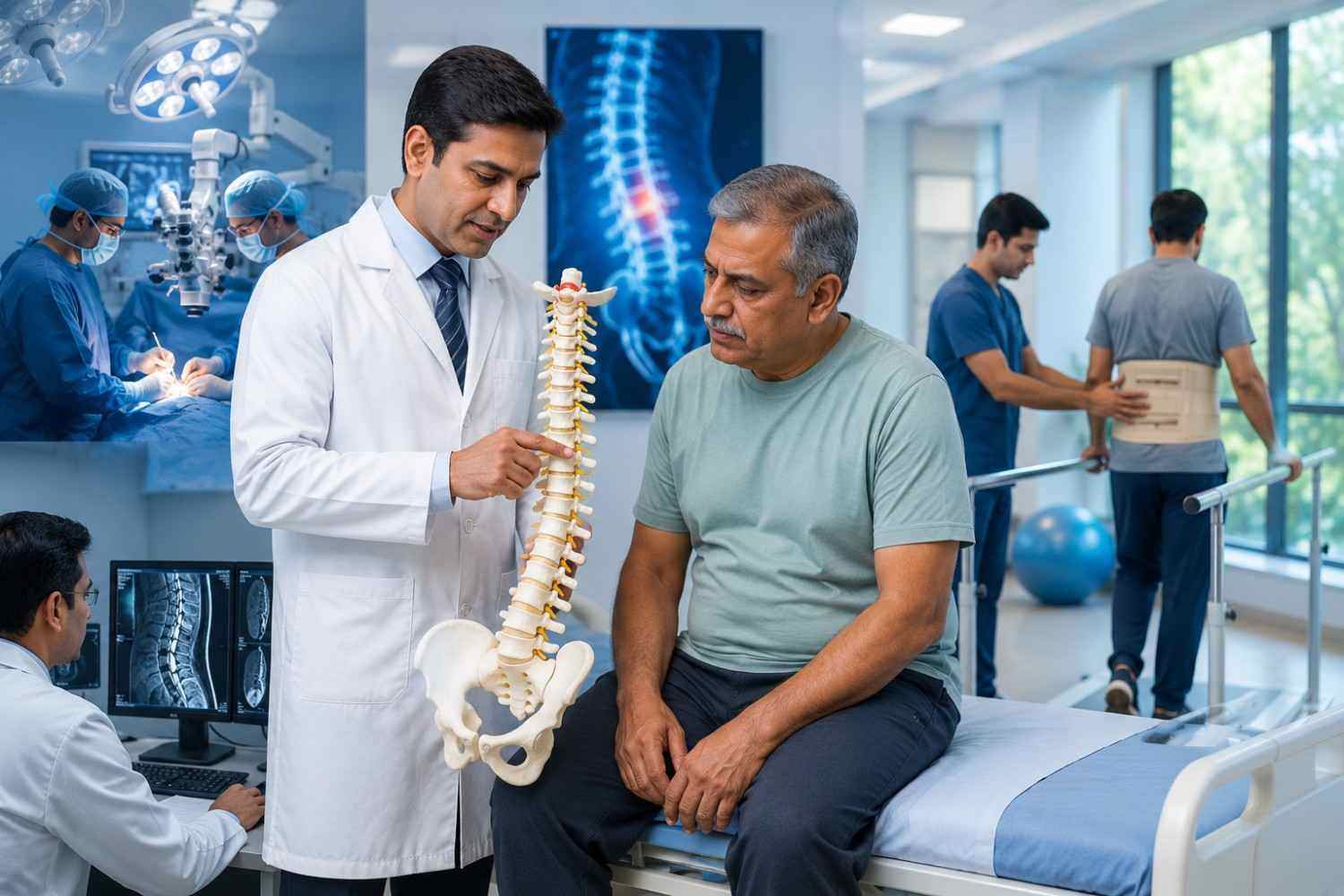
Diagnosis involves more than simply identifying back pain. A Spine Specialist in Delhi evaluates your symptoms, medical history, physical condition, and diagnostic reports.
The following steps help identify the underlying spinal problem.
1. Reviewing Medical History and Symptoms
The first step is understanding your symptoms.
The specialist may ask questions about when the pain started, where it occurs, and whether it travels towards your legs.
Important questions may include:
- Does your back pain increase while sitting?
- Does pain travel from your lower back to your feet?
- Do you experience numbness or tingling?
- Have you noticed weakness in your legs?
- Did the pain begin after lifting something heavy or experiencing an injury?
These details help identify possible nerve involvement and distinguish sciatica from other causes of back pain.
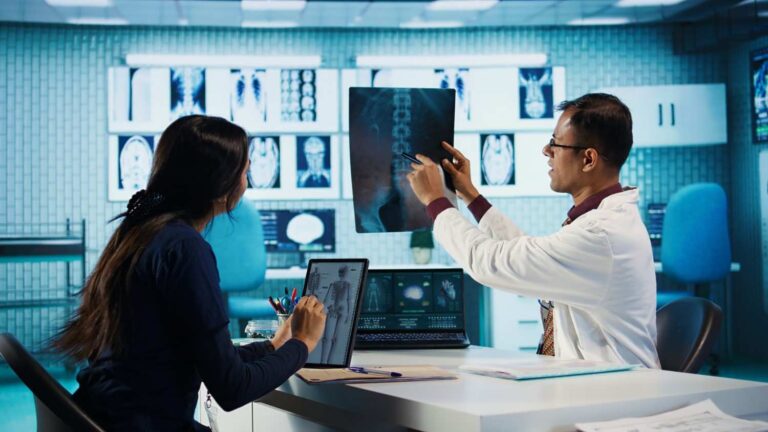
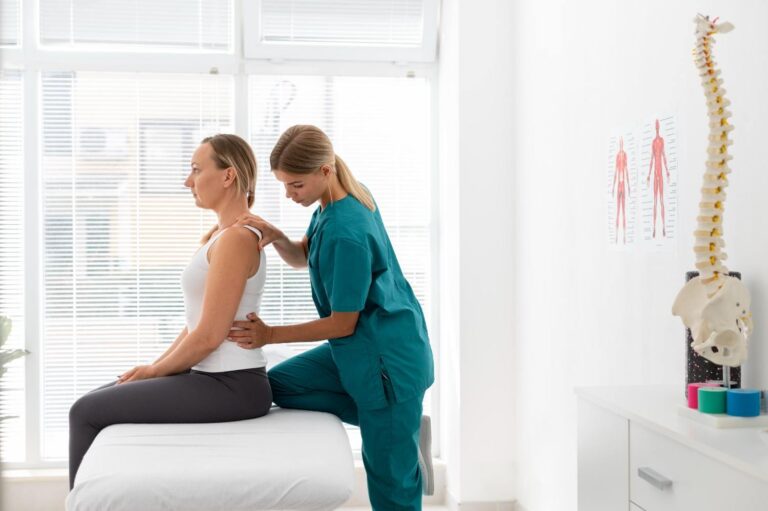
2. Physical Examination of the Spine
A physical examination helps assess spinal movement, muscle strength, and nerve function.
The specialist may ask you to perform simple movements, such as bending forward, walking, standing, or raising your leg.
These movements help identify restricted mobility and pain patterns.
The examination may include:
- Checking spinal flexibility.
- Assessing leg muscle strength.
- Evaluating sensation in different parts of the legs.
- Checking walking patterns and balance.
- Examining relevant reflexes.
A straight leg raise test may also be performed to check whether stretching the sciatic nerve reproduces your symptoms.
3. Straight Leg Raise Test for Sciatica
The straight leg raise test is commonly used when a lumbar disc problem is suspected.
During this examination, you lie on your back while the specialist slowly raises one leg without bending the knee.
If this movement reproduces radiating pain along the leg, it may indicate irritation of a spinal nerve root.
However, this test alone cannot confirm a slipped disc. The findings must be considered alongside your medical history and other examination results.
Which Diagnostic Tests Help Confirm a Slip Disc?
Physical examination provides important information. However, imaging tests may be needed to confirm the diagnosis and understand the condition of your spine.
1. MRI Scan of the Spine
An MRI scan is one of the most useful investigations for evaluating a suspected slipped disc.
It produces detailed images of the spinal discs, nerves, and surrounding soft tissues.
An MRI can help identify:
- Bulging or herniated spinal discs.
- Compression of nearby nerve roots.
- Changes in the spinal canal.
- The location and severity of disc abnormalities.
- Other possible causes of nerve-related pain.
A Spine Specialist in Delhi may recommend an MRI when symptoms persist, neurological problems are suspected, or imaging results could influence treatment decisions.
It is important to remember that an abnormal MRI finding does not always mean it is responsible for your pain.
2. X-Ray of the Spine
An X-ray provides images of the spinal bones and their alignment.
It cannot directly show a slipped disc because spinal discs are soft tissues.
However, it may help identify certain bone-related problems, fractures, or changes in spinal alignment.
3. CT Scan
A CT scan provides detailed images of the bones and spinal structures.
It may be recommended when an MRI is unsuitable or when additional information about the spinal bones is required.
The choice of investigation depends on your symptoms and clinical findings.
How Does a Spine Specialist Differentiate Slip Disc from Sciatica?
Although these conditions are closely related, they describe different problems.
A slipped disc is a structural condition involving the spinal disc. Sciatica describes pain caused by irritation or compression of the sciatic nerve roots.
A person may have a slipped disc without experiencing sciatica. Similarly, sciatica can develop due to conditions other than a slipped disc.
A specialist considers several factors when making this distinction.
Pain location: Slip disc-related pain may remain in the lower back or travel into the leg. Sciatica typically involves pain radiating along the sciatic nerve pathway.
Nerve symptoms: Tingling, numbness, and weakness may suggest nerve involvement.
Movement-related discomfort: Certain movements, such as bending or prolonged sitting, may increase symptoms.
Diagnostic findings: Physical examination and appropriate imaging help establish whether a disc abnormality matches the patient’s symptoms.
A comprehensive assessment helps avoid unnecessary treatment.
When Should You Consult a Spine Specialist in Delhi?
Occasional back pain may improve with appropriate rest and activity modification. However, certain symptoms require medical evaluation.
Consider consulting a Spine Specialist in Delhi if you experience:
- Back pain that continues for several weeks.
- Pain spreading towards your legs.
- Repeated episodes of sciatica.
- Numbness or tingling in your legs or feet.
- Difficulty walking or performing daily activities.
- Increasing muscle weakness.
Seek emergency medical attention if you develop new bladder or bowel control problems, numbness around the groin or saddle area, or severe or rapidly worsening leg weakness. These symptoms may indicate serious nerve compression.
Early assessment can help identify the cause and prevent delays in necessary treatment.
What Happens After a Slip Disc Diagnosis?
Treatment depends on the severity of symptoms, nerve involvement, and overall health.
Not every patient with a slipped disc requires surgery. Many people improve with non-surgical treatment.
Common treatment approaches include:
Medication: A doctor may recommend suitable medicines to manage pain and inflammation.
Physiotherapy: Guided exercises can improve flexibility, muscle strength, and spinal movement.
Activity modification: Avoiding movements that aggravate symptoms may help support recovery. However, prolonged bed rest is generally discouraged.
Pain management procedures: Selected patients with persistent or severe nerve-related pain may benefit from specialist-guided injections.
Surgery: Surgical treatment may be considered when significant symptoms persist despite appropriate non-surgical care or when serious neurological problems develop.
A qualified specialist can explain the available options and help determine an appropriate treatment plan.
Why Choose Pain X Spine & Joint Clinic?
Understanding the cause of back pain is essential for choosing the right treatment.
Pain X Spine & Joint Clinic focuses on the evaluation and management of spine and joint-related problems. A personalised approach helps consider individual symptoms, diagnostic findings, and daily activity limitations.
If you are experiencing persistent back pain, leg pain, or symptoms associated with a slipped disc, seeking professional medical advice can be an important step towards recovery.
Consulting a Spine Specialist in Delhi can help you understand your spinal condition and explore appropriate treatment options.
Conclusion
Slip disc and sciatica can affect mobility, comfort, and everyday activities. However, an accurate diagnosis can help identify the underlying problem and guide suitable treatment.
A detailed medical history, physical examination, and appropriate imaging tests play an important role in diagnosing these conditions.
If you are experiencing persistent back pain or radiating leg pain, do not ignore the symptoms. Consult a Spine Specialist in Delhi at Pain X Spine & Joint Clinic to understand your condition and discuss the next steps towards better spinal health.
FAQs
1. Can a Spine Specialist Diagnose a Slip Disc Without an MRI?
Yes. A specialist can initially assess a suspected slipped disc through medical history and physical examination. An MRI may be recommended when symptoms persist, nerve compression is suspected, or imaging could change the treatment plan.
2. What Is the Difference Between Slip Disc and Sciatica?
A slip disc occurs when spinal disc material bulges or moves beyond its normal boundary. Sciatica refers to pain travelling along the sciatic nerve pathway due to nerve irritation or compression. A slipped disc is one possible cause of sciatica.
3. Is an MRI Necessary to Diagnose Sciatica?
No. Sciatica can often be identified through symptoms and physical examination. An MRI is generally considered when symptoms persist, serious problems are suspected, or further investigation is needed to guide treatment.
4. Can Sciatica Occur Without Lower Back Pain?
Yes. Some people experience sciatica mainly as pain in the buttocks, thigh, calf, or foot. Lower back pain may be absent or less noticeable.
5. Can a Slip Disc Heal Without Surgery?
Yes. Many people with symptomatic lumbar disc herniation improve with non-surgical treatment, including appropriate medication, physiotherapy, and activity modification. Surgery may be considered when symptoms do not improve or serious neurological problems develop.
Go to https://painx.co.in/ for more information or to schedule a consultation.